
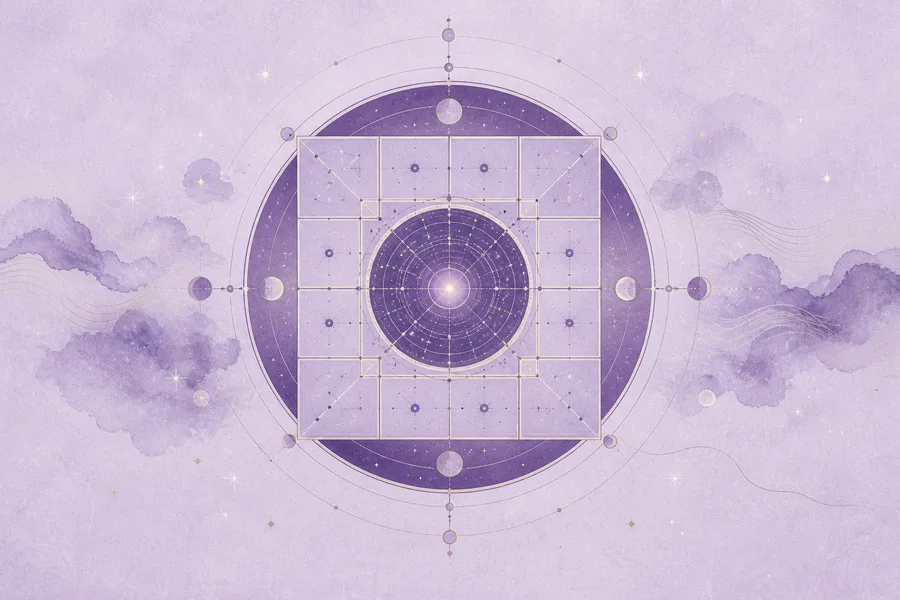
Zi Wei Dou Shu (紫微斗數) is a traditional Chinese astrological system that organizes a birth chart into twelve areas of life, usually called palaces. Rather than reducing the chart to one sign, it asks how timing, relationships, work, resources, and inner life relate to one another.
This preview guide shows how a finished Purple Heaven article will feel. It introduces the chart’s structure without pretending that one symbol can tell the whole story.
For a related example of reading movement, see I Ching changing lines.
The chart as a connected map
Each palace names a field of experience. The Life palace begins the conversation, but it is read alongside the opposite palace and two related palaces. This four-part relationship is often called the san fang si zheng (三方四正).
That connected reading is important: a palace is context, not a verdict. Stars, transformations, elemental relationships, and timing layers all change how a pattern is understood.
What the twelve palaces describe
Common English labels include Life, Siblings, Spouse, Children, Wealth, Health, Travel, Friends, Career, Property, Wellbeing, and Parents. Translations vary because each Chinese term carries a wider historical range than a single English word.
A useful way to begin
Start with structure before interpretation. Locate the Life palace, notice its opposite, and then inspect the two palaces that complete the relationship. Purple Heaven is designed to keep that evidence visible while you study.
This tradition is presented for reflection and entertainment. A chart can offer a language for inquiry; it does not replace your judgment.