
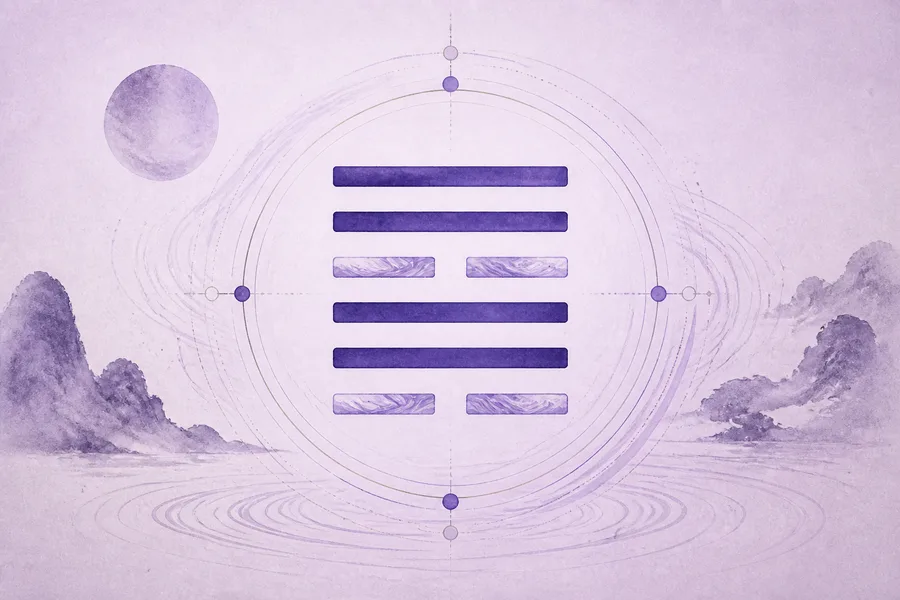
An I Ching consultation begins with a six-line figure called a hexagram. Each line may be stable or changing. When one or more lines change, they form a second, relating hexagram.
Primary and relating hexagrams
The primary hexagram describes the situation presented by the cast. The relating hexagram shows the pattern created by the changing lines. It is tempting to call one “now” and the other “the future,” but many reading traditions use a subtler relationship.
Read the moving lines closely
Changing line texts bring attention to a particular level of the hexagram. Their position, imagery, and relationship to nearby lines can matter as much as the final transformed figure.
Keep the question in view
A useful consultation preserves the original question, the exact cast, and the order of the lines. That evidence makes it possible to revisit the reading without rewriting what happened after the fact.
Purple Heaven’s I Ching workspace is designed for reflective use: it keeps the cast visible and leaves room for your own interpretation.